STEM Toys for Ages 9-12
Disclosure: This page contains affiliate links. If you buy through them we may earn a commission at no extra cost to you. As an Amazon Associate I earn from qualifying purchases. Details.
Tweens can handle real tools, longer projects, and kits with genuine depth. The challenge is that many of them drift from STEM toys at this age unless the gift feels grown-up and connects to their own interests. The goal is "real," not "educational." We haven't tested specific products; this is a framework for choosing.
Match the gift to the tween
| Interest | Gift direction |
|---|---|
| Video games | Game-design coding, or a robot they can program |
| Building | Advanced engineering or mechanical model kits |
| Taking things apart | Electronics kits, soldering-free circuit kits, a tool set |
| Space | A beginner telescope, star charts, rocket kits |
| Nature | A real microscope, field guides, a weather station |
| Art and design | Circuit art, stop-motion animation kits |
| Music | DIY instrument or synthesizer kits |
Ideas by category
Coding and robotics
- Programmable robot kits that progress from block-based coding to text-based coding. Check which platforms the app supports. See coding robots compared. Programmable robot kits → Amazon
- Beginner microcontroller kits with guided projects, for tinkerers ready for more. Microcontroller starter kits → Amazon
Electronics
- Snap-together circuit kits that build many projects without soldering. Snap circuit kits → Amazon
- Electronics kits with guided projects like alarms, radios, or lights.
Real science equipment
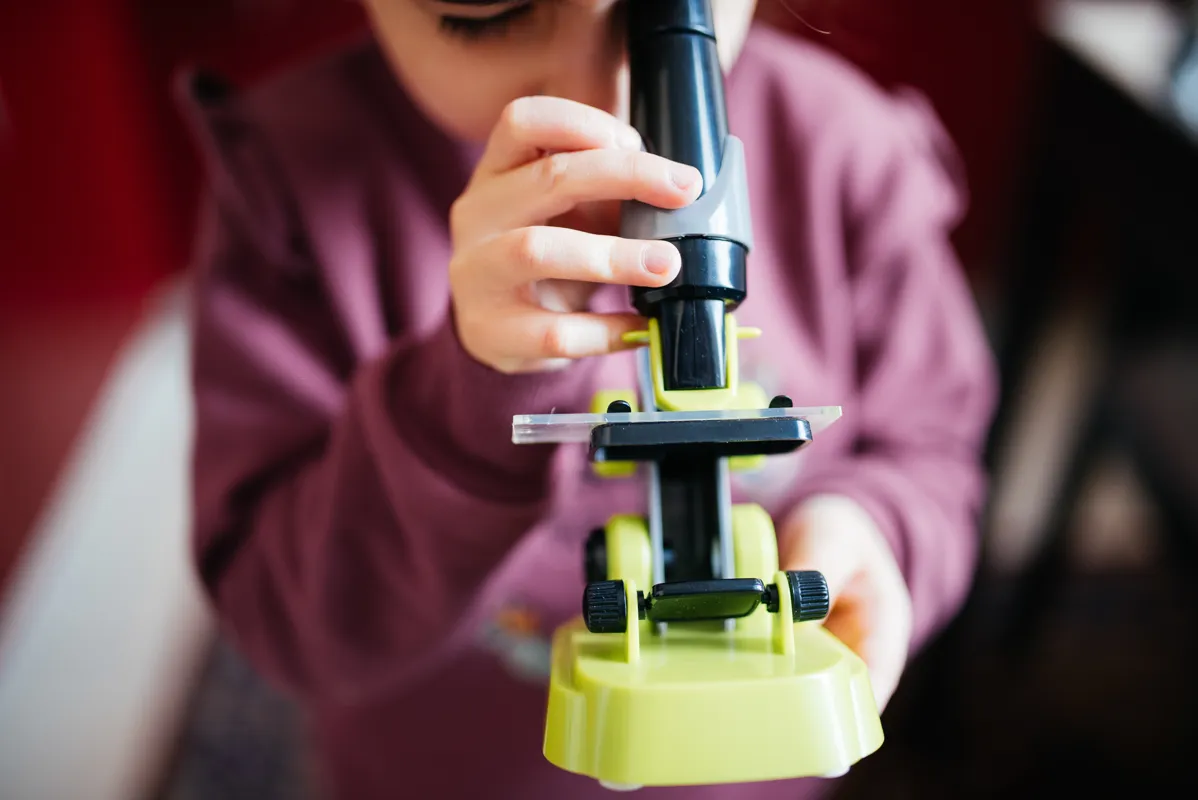
- A real (not toy) microscope with slides and a slide-making kit. Student microscopes → Amazon
- A beginner telescope, with realistic expectations: an adult should help with setup and finding objects at first. Beginner telescopes → Amazon
- Chemistry sets designed for this age, used as directed, with supervision as the kit specifies.
Engineering and building
- Mechanical model kits with working gears, such as wooden mechanical models. Mechanical model kits → Amazon
- Advanced construction sets with motors and gearboxes.
- Bridge and catapult engineering challenges.
Math and logic
- Strategy board games and logic puzzle books. Strategy games → Amazon
- Rubik's-style puzzles and other mechanical puzzles.
What makes it stick
- An open path to their own projects. Kits that end at "you're done" lose to kits that say "now invent something."
- Real tools and real results. Tweens notice toy-grade gear.
- Online communities and project ideas. Many coding and electronics platforms have project libraries; check what's available.
- Some independence. Let them struggle a bit before helping.
- A connection to something they already love, whether games, music, sports, or art.
Safety
Electronics kits, chemistry sets, and tools come with age labels and instructions for a reason. Follow them, supervise as directed, and keep kits with small parts away from younger siblings. The CPSC's small-parts and choking-hazard rules apply most directly to toys for children under 6, but younger kids in the house are the usual concern.
What to skip
- Kits that feel babyish. Packaging matters to a 12-year-old.
- Overly complex kits with no guided path. Too much frustration and they give up.
- Screen-only "STEM" apps, if you're trying to balance screen time.
Older? See STEM gifts for teens.
FAQ
What's a good STEM gift for a 10 year old?
Something with real depth in an area they care about: a programmable robot kit for gadget fans, an electronics kit for tinkerers, a telescope or microscope for science lovers, or a complex model or engineering kit for builders.
How do I keep a tween interested in STEM?
Follow their interests, choose kits that lead to their own projects, and avoid anything that feels like homework.
Related guides
- Best STEM Toys for 6, 7, and 8 Year Olds
- STEM Gifts for Teens That Aren't Toys
- Coding Robots for Kids Compared: How to Choose by Age